Pelvic floor health in El Albir
Urinary leakage, a feeling of heaviness or loss of tone are common after pregnancy, during the menopause or with repeated sporting impact. And they can be treated.
When the pelvic floor needs treating
The pelvic floor is the group of muscles that supports the bladder, the uterus and the rectum, and that plays a part in continence and in sexual function. Like any muscle, it loses tone. The difference is that its weakness cannot be seen, which is why people live with it for far longer than they need to.
These are the signs that bring patients to the clinic:
Urinary leakage when coughing, laughing, sneezing or jumping. This is the most common reason and the one most often treated as normal: it is assumed to be an inevitable consequence of having had children or of getting older, and it is not.
A feeling of heaviness or pressure in the pelvic area, particularly at the end of the day or after standing for a long time.
Urinary urgency: only just making it, needing to locate the toilet on arriving somewhere, getting up during the night.
After pregnancy and childbirth. The pelvic floor bears months of load, and childbirth adds a direct impact. Any work afterwards should start from a medical assessment that establishes the right time to begin.
During the menopause. Hormonal changes affect the tissue and muscle tone, and many women notice symptoms then that they did not have before.
From repeated high-impact sport. Running, jumping or lifting weights subjects the area to constant pressure. It is a frequent cause in sportswomen with no obstetric history at all.
In men. The male pelvic floor exists and it also weakens. At Alta Armonía there is a specific protocol for men.
The pelvic floor is a group of muscles supporting very specific functions, and it weakens with pregnancies, the menopause or repeated sporting impact. Alta Armonía is the only centre in the Marina Baixa with Pelvi Center®, with protocols for women and for men.
Pelvic floor
Ask about it with no obligation at the first visit: we assess your case and explain what course of treatment you would need.
Why it is not worth leaving it
The pelvic floor muscles do not recover on their own: without specific work, the tendency is for tone to keep falling. And because the symptoms appear gradually, what usually happens is that people adapt to them — planning where the toilets are, giving up running, using protection every day — without ever considering it as something treatable.
That adaptation has a cost that is rarely named: activities given up, sport abandoned and a sustained discomfort that ends up affecting social life and sexual life. The sooner it is assessed, the more room there is to work with.
It is also necessary to rule out what it is not. Not all urinary symptoms are explained by muscle weakness, which is why the starting point is always a medical assessment: to confirm what is happening and, if the case calls for another route, to say so.
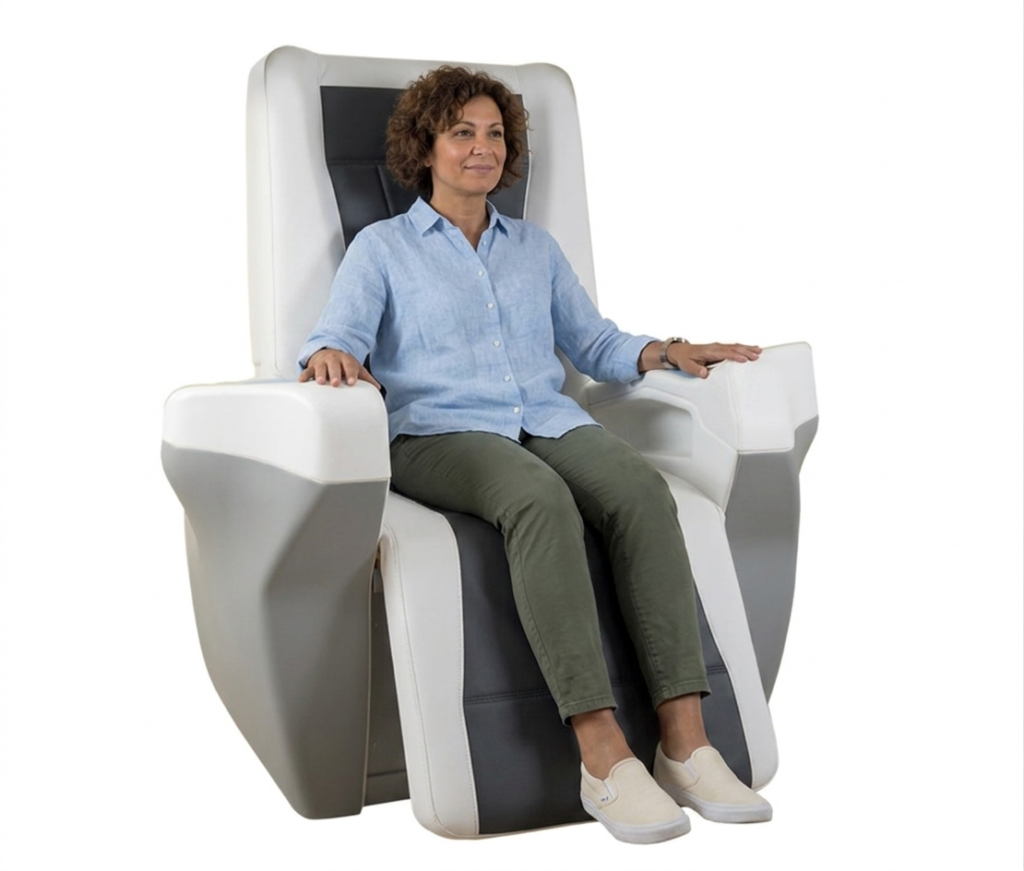
How it is approached at Alta Armonía. We are the only centre in the Marina Baixa with Pelvi Center®, the pelvic floor rehabilitation programme delivered with Pelvi-Up. The session is carried out seated and fully clothed, with no direct contact with the area, and the course — the number of sessions and how often — is set out in the prior assessment. The detail of the technology and how it works is on the Pelvi-Up treatment page.
Frequently asked questions about the pelvic floor
Is it only for women?
No. The male pelvic floor also weakens and also causes symptoms. At Alta Armonía there is a protocol for men and for women.
Do I have to undress?
No. The session is carried out seated and fully clothed, with no direct contact with the area. It is one of the reasons this kind of treatment is easier to keep up over time than the alternatives.
Is it the same as doing Kegel exercises?
They work the same muscles, but not in the same way. The difficulty with Kegels is isolating the contraction correctly: it is common to believe you are activating the pelvic floor when in fact you are contracting the abdomen or the glutes. With Pelvi-Up the contraction does not depend on the patient’s technique.
How many sessions do I need?
It is planned as a course of sessions adapted to each case. The number and the frequency are determined in the medical assessment, according to the symptoms and the starting point.
I have just had a baby — can I start now?
It is the medical assessment that establishes the right time to begin in each case. It is precisely the question worth bringing to the first consultation rather than settling online.
Does this replace pelvic floor physiotherapy?
They are different approaches and in many cases complementary. The assessment establishes what is indicated in your case and whether it is worth combining it with another approach.
If you recognise any of these signs, the next step is an assessment. The first consultation is a medical visit in which your case is examined and you are told what course of treatment you would need, with no obligation to book anything.
Alta Armonía is a medical aesthetic centre in El Albir, at Av. de l’Albir 155, with free parking and care in Spanish, English, French and Arabic. Alongside pelvic floor health we also work in facial aesthetic medicine and body aesthetic medicine.

Not sure which treatment you need? Book a medical assessment with no obligation.
At Alta Armonía we assess your case and recommend the protocol best suited to your goals. No rush, no pressure. Only the treatment you genuinely need, supervised by our medical team in El Albir.
Before taking the step, you may want to get to know the centre and the team behind it.